

Learning Through Play is a topic where clear, trustworthy guidance matters. Parents need practical steps, not panic or vague advice. This guide explains what to notice, what to do next and where local context or professional support should take priority.
Families across Africa live with different health systems, schools, technologies, costs and regulations. The principles below can help you make better decisions, but country-specific requirements and urgent health or safety concerns should always be checked with the appropriate qualified professional or official authority.
Learning Through Play: start with the essentials
Use this guide as a framework for calm action. Focus on safety first, then build routines that strengthen judgment, communication and consistency. When evidence changes or a topic depends on local rules, prefer primary and official sources over viral claims.
1. Pretend play grows conversation
A shop, kitchen, clinic or transport game gives children reasons to name objects, negotiate roles and build stories.
Respond with curiosity before judgment. Gather enough information to understand what is happening, choose a proportionate next step, and explain the reason in language the child or family can understand. Keep notes when details matter and involve qualified support when the situation is outside normal parenting judgment.
2. Blocks develop spatial thinking
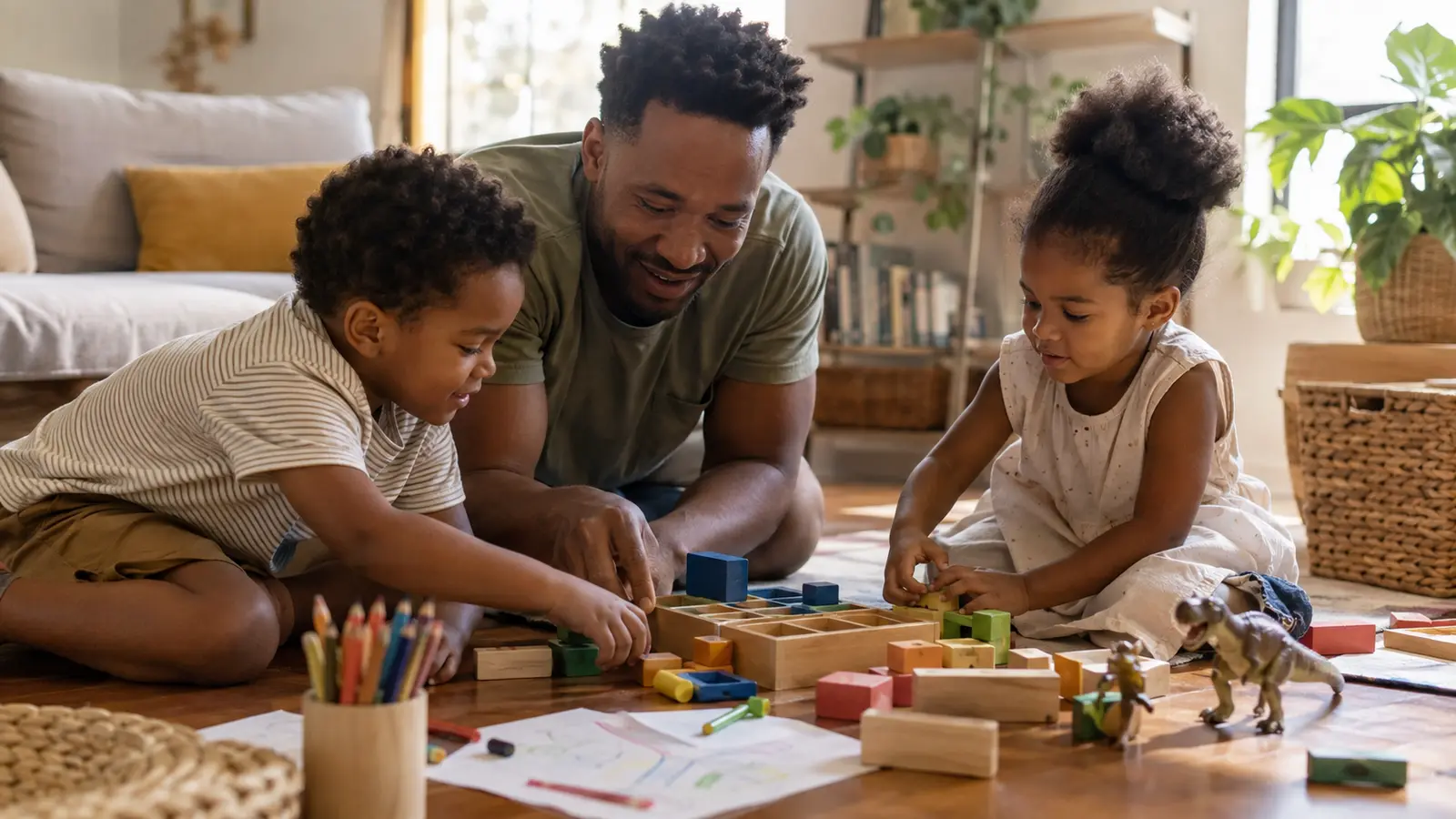
Stacking, balancing and building invite children to compare size, shape, symmetry and stability through direct experimentation.
Respond with curiosity before judgment. Gather enough information to understand what is happening, choose a proportionate next step, and explain the reason in language the child or family can understand. Keep notes when details matter and involve qualified support when the situation is outside normal parenting judgment.
3. Outdoor play builds movement
Running, climbing, throwing and balancing support coordination when children have safe, age-appropriate spaces to move.
Respond with curiosity before judgment. Gather enough information to understand what is happening, choose a proportionate next step, and explain the reason in language the child or family can understand. Keep notes when details matter and involve qualified support when the situation is outside normal parenting judgment.
4. Sorting turns objects into maths
Buttons, leaves, bottle caps or toys can be grouped by colour, size, shape or function, building classification and early number ideas.
Respond with curiosity before judgment. Gather enough information to understand what is happening, choose a proportionate next step, and explain the reason in language the child or family can understand. Keep notes when details matter and involve qualified support when the situation is outside normal parenting judgment.
5. Art encourages experimentation
Drawing, clay and collage let children make choices, test materials and represent ideas without one correct answer.
Respond with curiosity before judgment. Gather enough information to understand what is happening, choose a proportionate next step, and explain the reason in language the child or family can understand. Keep notes when details matter and involve qualified support when the situation is outside normal parenting judgment.
6. Games practise self-control
Taking turns, remembering rules and coping with losing can exercise attention, patience and emotional regulation.
Respond with curiosity before judgment. Gather enough information to understand what is happening, choose a proportionate next step, and explain the reason in language the child or family can understand. Keep notes when details matter and involve qualified support when the situation is outside normal parenting judgment.
7. Story play builds perspective
Acting out characters can help children explore feelings, motivations and different points of view.
Respond with curiosity before judgment. Gather enough information to understand what is happening, choose a proportionate next step, and explain the reason in language the child or family can understand. Keep notes when details matter and involve qualified support when the situation is outside normal parenting judgment.
8. Child-led play builds agency
When adults sometimes follow rather than direct, children practise planning, decision-making and persistence.
Respond with curiosity before judgment. Gather enough information to understand what is happening, choose a proportionate next step, and explain the reason in language the child or family can understand. Keep notes when details matter and involve qualified support when the situation is outside normal parenting judgment.
9. Simple materials are enough
Play does not require expensive toys. Safe household and natural materials can support rich learning with suitable supervision.
Respond with curiosity before judgment. Gather enough information to understand what is happening, choose a proportionate next step, and explain the reason in language the child or family can understand. Keep notes when details matter and involve qualified support when the situation is outside normal parenting judgment.
A practical next-step checklist
- Identify the most important immediate concern.
- Use a trusted source to check the facts.
- Choose one clear action rather than ten vague intentions.
- Talk with the child or relevant family member.
- Review the outcome and escalate to professional help when needed.
For the wider context, continue with our related Parenting.Africa pillar guide.
Frequently asked questions about Learning Through Play
Should parents act immediately?
Urgent health and safety concerns need prompt action. For non-urgent issues, pause long enough to gather reliable information and respond proportionately.
Can online advice replace local guidance?
No. Online guidance can improve your questions, but local laws, medical pathways, school policies and financial rules vary.
What is the best first step?
Start with the action that reduces the greatest risk or uncertainty, then build the next habit after that step is stable.
Trusted sources
Editorial note: Parenting.Africa provides general educational information and does not replace individualized medical, mental-health, legal or financial advice.