


Child Nutrition Africa is not one menu for 54 countries. Food cultures, prices, seasons and household resources vary enormously. A useful nutrition framework therefore focuses on principles families can adapt: dietary variety, age-appropriate feeding, safe food, sensible portions and less dependence on highly processed foods.
This article provides general education. Children with allergies, medical conditions, feeding difficulties, growth concerns or signs of malnutrition need individualized advice from a qualified health professional.
Child Nutrition Africa: 10 habits that matter
1. Build variety across the week
No single food supplies everything a growing child needs. Combine the foods available to your family across groups such as vegetables and fruit, beans and pulses, grains or starchy staples, eggs, dairy where appropriate, fish, meat or other protein foods, and healthy fats. Variety can be local and affordable; it does not require imported “superfoods.”
2. Prioritize nutrient-dense foods in early childhood
Young children have small stomachs but substantial growth needs. UNICEF notes that children’s first foods should support rapidly developing bodies and brains, yet many young children globally lack sufficient dietary diversity. The UNICEF early childhood nutrition guidance is a useful evidence-based reference.
3. Follow age-appropriate infant feeding guidance
Infant feeding requires special care. WHO provides detailed infant and young child feeding guidance. Parents should discuss feeding, growth and any concerns with a qualified maternal or child-health professional, especially where prematurity, illness or feeding difficulties are involved.
4. Make vegetables and fruit ordinary
Children often need repeated, low-pressure exposure to foods before accepting them. Offer available produce in different forms and eat it as a family when possible. Avoid turning vegetables into punishment or dessert into a moral reward. The goal is familiarity and a sustainable relationship with food.
5. Use local staples intelligently
Maize, rice, cassava, yam, millet, sorghum, plantain and other staples can provide energy, but meals become more nutritionally complete when paired with diverse vegetables and protein-rich foods. Think in combinations rather than labelling traditional staples as “good” or “bad.”
6. Watch highly processed snacks and sugary drinks
WHO’s current healthy diet fact sheet warns that many diets contain more highly processed foods high in unhealthy fats, free sugars and salt while falling short on fruit, vegetables and fibre. Water should usually be the default drink for older infants and children when appropriate for age and local water safety.
7. Let children participate
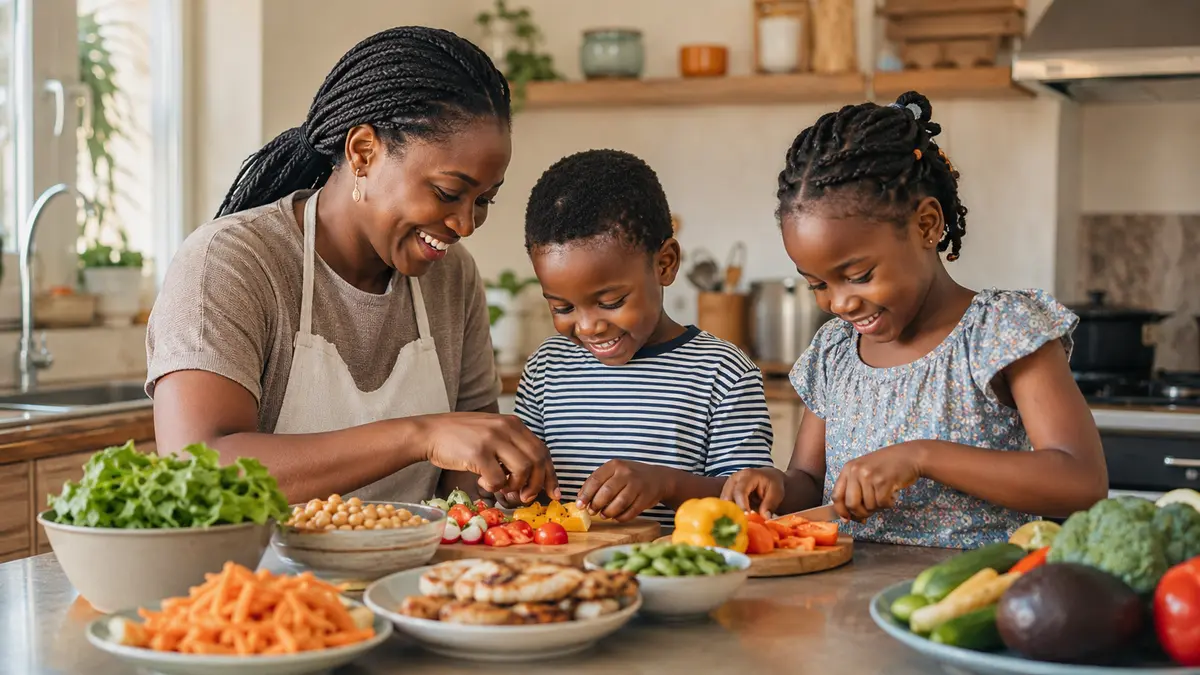
Age-appropriate involvement can reduce resistance and build practical food skills. Young children can wash produce with supervision; older children can measure, mix, plan a meal or compare food labels. Participation turns nutrition from something adults impose into a life skill.
8. Protect food safety
Clean hands, safe water, proper cooking, safe storage and avoiding cross-contamination matter as much as nutrient choice. Foodborne illness can be especially serious for young children. Adapt food-safety practices to local water, refrigeration and storage conditions.
9. Look at growth patterns, not appearance
Do not diagnose undernutrition or overweight by looking at a child or comparing them with siblings. Trained health professionals use age-appropriate growth measures and clinical context. WHO defines malnutrition broadly to include deficiencies, excesses and imbalances, so both too little and poor-quality excess intake can be concerns.
10. Make the household environment do the work
Children eat what is repeatedly available and observe what adults do. Keep convenient nutritious options available where your budget allows, create predictable meal routines, and model the habits you want to encourage. Small structural changes are often more effective than repeated lectures.
A simple balanced-meal framework
Rather than copying an imported menu, ask four questions: What is our main staple or whole-grain food? What vegetable or fruit can we add? What protein-rich food is available? What safe drink fits this meal? The exact answer can change by country, season, culture and budget.
Africa-specific nutrition reality
UNICEF reported in 2024 that severe child food poverty remains a major challenge across Africa. This makes affordability and access central to any realistic advice. Families should not be shamed for structural constraints. Policy, food systems, healthcare, social protection and school environments all influence what children can eat.
Frequently asked questions
Do children need imported superfoods?
No. Nutritional quality comes from an overall varied diet that meets a child’s needs, not from a fashionable imported ingredient.
What if my child is a picky eater?
Keep mealtimes calm, offer appropriate variety repeatedly and avoid force. Persistent restriction, distress, poor growth or suspected sensory/medical issues should be discussed with a qualified professional.
Should I give vitamin supplements?
Needs vary by age, diet, health and location. Ask a qualified clinician before giving supplements routinely.
How do I know if growth is healthy?
Use regular child-health visits where trained professionals can measure and interpret growth over time rather than relying on appearance.
Child Nutrition Africa works best within a whole-family approach. Pair these habits with our African Parenting Guide and the broader Child Health & Wellness resources as they expand.