


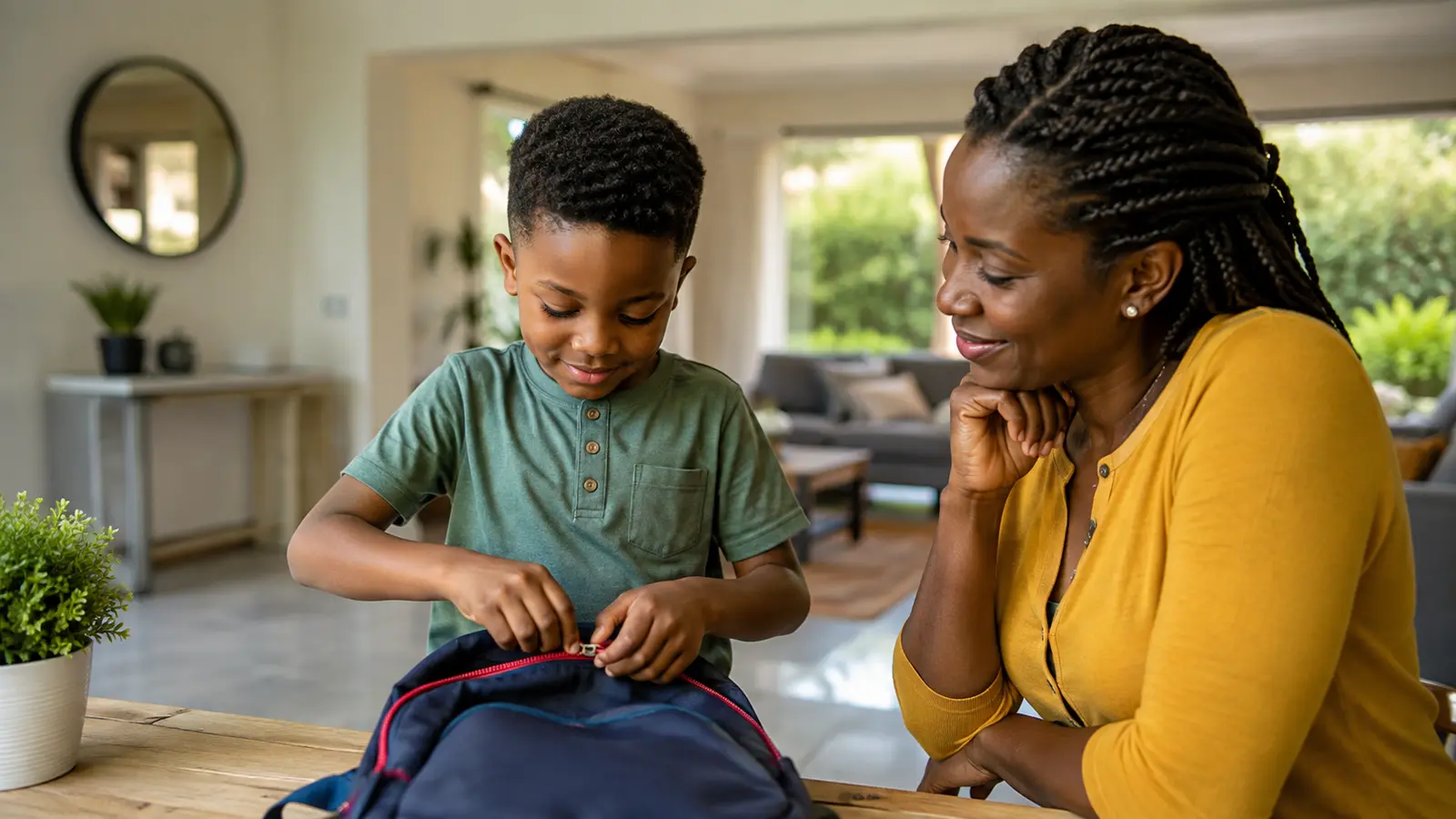
Raising Confident Children in Africa is not about raising children who are never afraid or who always succeed. Confidence grows when children feel secure, have chances to try difficult things, learn from mistakes and know that the adults around them value who they are. Across Africa, families do this within many languages, cultures, faiths and household structures. The practical goal is the same: help a child develop a healthy belief that they can learn, contribute and recover when life is difficult.
This guide offers seven practical strategies parents and caregivers can adapt to their child’s age, temperament and local context. Confidence should never require a child to ignore danger, hide distress or become independent before they are ready.
What does raising confident children in Africa involve?
Healthy confidence combines connection, competence and resilience. A confident child can ask for help, attempt something new, express an opinion respectfully and tolerate an imperfect result. UNICEF notes that safe, loving and nurturing relationships support children’s development and resilience. That makes emotional security the starting point, not a reward a child must earn.
1. Build security before demanding bravery
Children explore more freely when home feels emotionally safe. Make time for ordinary connection: greet your child warmly, listen without immediately correcting, keep reasonable promises and repair the relationship after conflict. A secure bond does not mean saying yes to everything. It means the child knows that limits do not cancel love.
For younger children, predictable routines can provide reassurance. For older children, regular one-to-one conversations can create space to discuss friendships, school pressure and worries. UNICEF’s guidance on parent-child attachment explains why responsive, nurturing relationships matter to development.
2. Give children real responsibilities
Confidence grows from evidence. A child who repeatedly contributes learns, “I can be useful.” Give age-appropriate responsibilities such as arranging books, helping prepare a meal, watering plants, packing a school bag, checking a shopping list or helping a younger sibling with a simple task.
Start small enough for success, teach the task clearly, then step back. If adults redo every job in front of a child, the hidden message can become, “Your effort is not good enough.” Correct safety issues when necessary, but allow harmless imperfections.
3. Praise effort, strategy and progress
Specific feedback is more useful than constant labels such as “You are the smartest.” Say what you observed: “You kept trying different ways until that worked,” or “You prepared carefully for that presentation.” This helps children connect progress with actions they can repeat.
UNICEF’s guidance for building teen self-confidence similarly emphasizes recognizing effort and taking young people’s experiences seriously. The principle applies beyond adolescence: notice the process, not only the prize.
4. Let mistakes become information
If every mistake triggers shame, children learn to avoid challenges. Try replacing “How could you do that?” with three questions: What happened? What did you learn? What will you try next time? Accountability still matters, especially when another person has been hurt, but correction can be firm without attacking a child’s identity.
Model this yourself. A parent saying, “I handled that badly. I am sorry, and I will try again,” teaches more about resilience than a lecture on perfection.
5. Teach children to speak and decide
Give children bounded choices: which of two healthy snacks, which book before bed, how to organize homework, or which extracurricular activity to try. Older children can participate in discussions about schedules, responsibilities and appropriate digital rules. Choice builds judgment when it is paired with reasonable limits.
Invite opinions even when you make the final decision. A child who can express disagreement respectfully at home is practising a skill that can help with peer pressure, unsafe situations and future leadership.
6. Protect identity without creating superiority
African children may grow up navigating local traditions, global media, multiple languages or life in the diaspora. Help them know family stories, languages, community history and cultural practices while also teaching curiosity and respect for people who are different. Pride is strongest when it does not depend on putting another group down.
Representation matters too. Choose books, examples and role models that show African children and adults as scientists, artists, carers, entrepreneurs, teachers, builders and leaders. Our STEM Education Africa guide offers ideas for building capability through practical learning.
7. Build confidence through manageable challenges
Do not remove every obstacle. Instead, adjust the challenge so your child has a realistic chance to stretch. A shy child might first greet one visitor, then ask a shopkeeper a simple question, then present to a small group. A child learning to cook might begin by measuring ingredients before using heat.
Progressive challenges let courage grow from experience. They also help parents notice whether a child needs encouragement, more practice or professional support for persistent anxiety or distress.
A simple weekly confidence routine
- One responsibility: give your child a task that genuinely helps the household.
- One challenge: choose something slightly beyond their current comfort zone.
- One conversation: listen for ten minutes without multitasking or immediately solving the problem.
- One reflection: ask what they learned this week and what they want to try next.
Confidence also depends on the wider parenting environment. See our African Parenting Guide for a broader foundation, and the Child Development Milestones guide for age-aware expectations.
Frequently asked questions
Can too much praise reduce confidence?
Praise is most useful when it is specific and believable. Focus on effort, decisions, kindness, persistence and improvement rather than praising everything automatically.
What if my child is naturally shy?
Shyness is not failure. Avoid forcing a quiet child to perform a different personality. Build social confidence gradually through manageable situations and supportive preparation.
How do I know when low confidence needs extra help?
Consider professional support if fear, persistent sadness, severe self-criticism or withdrawal is interfering with school, relationships or everyday activities. Start with an appropriate qualified health or mental-health professional in your country.
Final thought
Raising confident children is less about motivational speeches and more about repeated experiences of being loved, trusted, challenged and heard. Give children roots in family and culture, room to develop competence, and permission to learn imperfectly. Over time, those small experiences become evidence they can carry into school, relationships and adulthood.