

STEM Activities for Kids Africa matters to families across Africa, but useful advice must fit a child’s age, family circumstances, local services and the evidence behind it. This guide turns the topic into practical actions parents can use without chasing perfection. Start small, observe what works, and adapt the approach to your household.
Africa is not one parenting environment. Access, costs, languages, regulations and services differ widely between countries and communities. Use the principles below as a decision framework, then confirm country-specific health, education or financial details with the appropriate local authority or qualified professional.
STEM Activities for Kids Africa: what to know first
Good family decisions usually combine reliable information, observation and routines that can be sustained. Avoid dramatic promises and one-size-fits-all advice. Safety comes first, followed by consistency and gradual improvement.
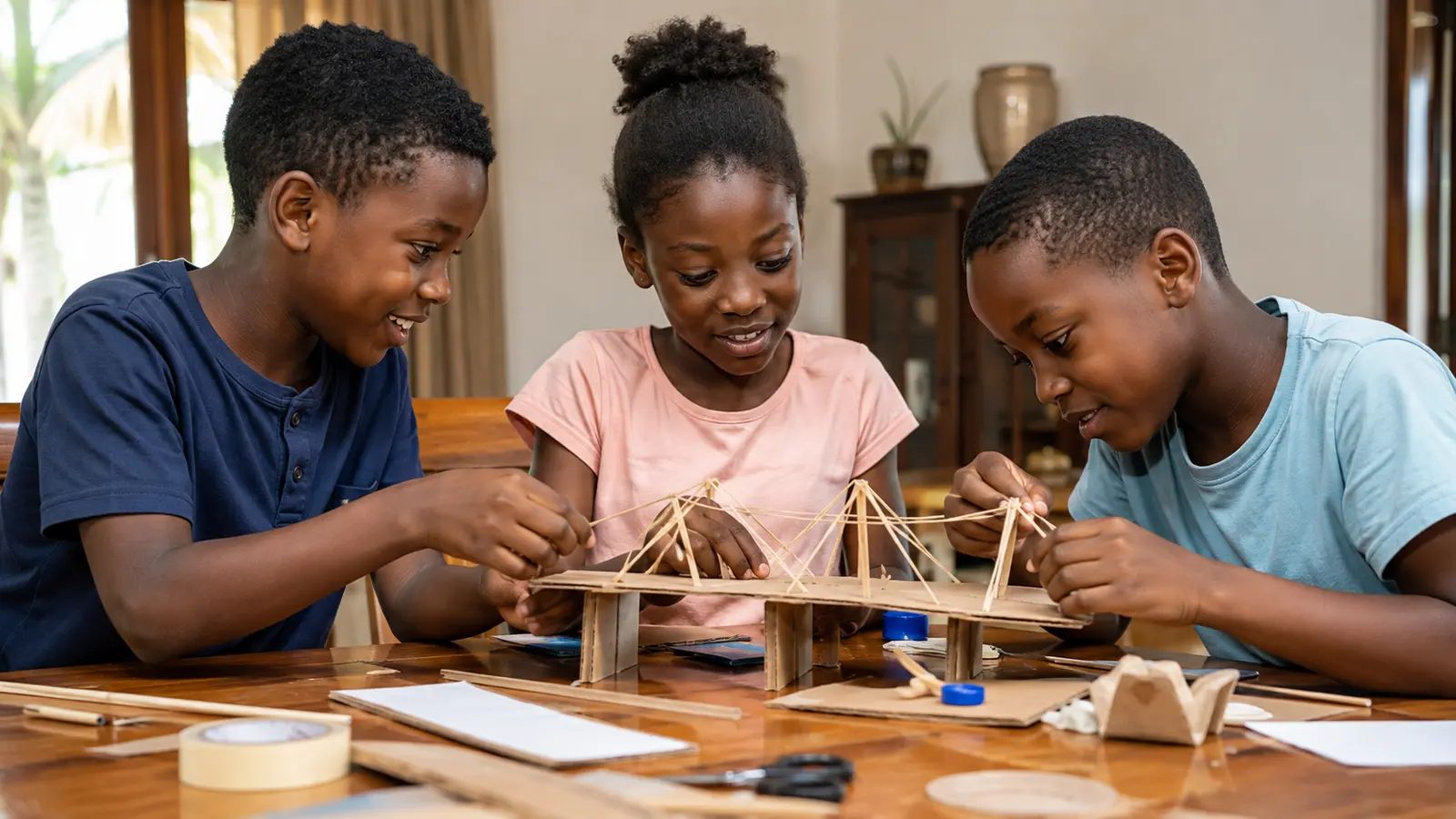
1. Build a paper bridge
Use paper, books and coins or bottle caps to test which folded bridge shape holds the most weight. Change one feature, test again and compare evidence.
Turn this into action by choosing one realistic step you can repeat this week. Keep the change simple enough to survive busy days. Notice progress, stress and unintended effects, and adjust rather than assuming one technique must work for every family.
2. Track a shadow
Mark a stick's shadow at several times of day. Compare length and direction, then discuss sunlight, time and careful observation.
Turn this into action by choosing one realistic step you can repeat this week. Keep the change simple enough to survive busy days. Notice progress, stress and unintended effects, and adjust rather than assuming one technique must work for every family.
3. Model water filtration
Layer clean gravel, sand and cloth in a cut bottle to explore filtration. This is a science model only: filtered water is not automatically safe to drink.
Turn this into action by choosing one realistic step you can repeat this week. Keep the change simple enough to survive busy days. Notice progress, stress and unintended effects, and adjust rather than assuming one technique must work for every family.
4. Try balloon power
Use air from a balloon to move a lightweight object. Change one variable at a time and measure which design travels farther.
Turn this into action by choosing one realistic step you can repeat this week. Keep the change simple enough to survive busy days. Notice progress, stress and unintended effects, and adjust rather than assuming one technique must work for every family.
5. Measure a recipe
Cooking develops ratios, measurement, estimation and sequencing. Let children halve or double a simple recipe with appropriate supervision.
Turn this into action by choosing one realistic step you can repeat this week. Keep the change simple enough to survive busy days. Notice progress, stress and unintended effects, and adjust rather than assuming one technique must work for every family.
6. Design a strong tower
Build with rolled paper, cartons or reusable containers. Set a height or weight challenge and encourage redesign after each test.
Turn this into action by choosing one realistic step you can repeat this week. Keep the change simple enough to survive busy days. Notice progress, stress and unintended effects, and adjust rather than assuming one technique must work for every family.
7. Keep an observation journal
Track rainfall, plant growth, insects or temperature. Recording evidence turns ordinary surroundings into an ongoing science investigation.
Turn this into action by choosing one realistic step you can repeat this week. Keep the change simple enough to survive busy days. Notice progress, stress and unintended effects, and adjust rather than assuming one technique must work for every family.
8. Map a familiar journey
Draw a safe familiar route and add landmarks, approximate distances and directions to practise spatial reasoning.
Turn this into action by choosing one realistic step you can repeat this week. Keep the change simple enough to survive busy days. Notice progress, stress and unintended effects, and adjust rather than assuming one technique must work for every family.
9. Test sink or float
Predict what safe household objects will do in water, test them, record the results and look for patterns in material and shape.
Turn this into action by choosing one realistic step you can repeat this week. Keep the change simple enough to survive busy days. Notice progress, stress and unintended effects, and adjust rather than assuming one technique must work for every family.
10. Play an unplugged coding game
One person acts as a robot while another gives precise step-by-step commands. Debug unclear instructions together to build computational thinking without a device.
Turn this into action by choosing one realistic step you can repeat this week. Keep the change simple enough to survive busy days. Notice progress, stress and unintended effects, and adjust rather than assuming one technique must work for every family.
A simple family action plan
- Choose the issue that matters most right now.
- Pick one realistic action from this guide.
- Decide when and how often you will do it.
- Watch for progress or new concerns.
- Review after one or two weeks and adjust.
For broader context, read our related Parenting.Africa pillar guide. Strong topical learning comes from connecting the immediate question to the wider parenting principle.
Frequently asked questions about STEM Activities for Kids Africa
Do I need to do everything at once?
No. Prioritize safety and urgent needs, then add one manageable habit at a time. Sustainable routines are usually more useful than long checklists.
Does this advice apply in every African country?
The core principles are broadly useful, but schedules, services, laws, school rules and financial regulations vary. Confirm local details with official sources.
When should I seek professional help?
Seek qualified local help promptly for concerns involving serious health symptoms, safety, development, severe distress, abuse or financial decisions you do not understand.
Trusted sources
Editorial note: Parenting.Africa provides general educational information. Health and financial content does not replace individualized professional advice.